
Most contact centers build capacity for their worst day, not their average one. Every year the same scenario plays out: a peak arrives, volume surges, the operation scrambles — and every available response option is expensive, slow, or creates a new problem on the other side. This isn't a planning failure. It's a structural one.
Every year, the same scenario plays out across contact centers: a peak period arrives, volume surges, the operation is overwhelmed, and leadership scrambles for a solution. Add more people? Contract a BPO? Ask existing personnel to work additional hours? Each option is expensive, slow, and creates a new problem on the other side of the peak. This isn't a planning failure. It's a structural one — and understanding why the math never actually works is the first step to fixing it.
The Permanent Headcount Trap
Traditional contact center staffing rests on a deceptively simple model: bring on enough people to handle your expected volume, build in a buffer for peak periods, and manage from there. In practice, this creates a cost structure that penalizes you in two directions at once.
During slow periods, you're paying for idle capacity — Service Providers logged in, available, and drawing compensation, but handling a fraction of the volume that justified bringing them on. During peaks, that same headcount proves insufficient because the spike exceeds even the buffer you built in, and the response options (additional hours, temporary staffing, BPO overflow) all come with their own costs and quality risks.
The math that makes permanent headcount feel safe — "we'll always have coverage" — is the same math that makes it expensive. Sizing for peaks means subsidizing valleys.
What Seasonal Demand Actually Looks Like
The word "seasonal" understates how volatile real demand patterns are. Consider the range:
- A tax filing software company needs to triple customer support capacity for roughly 10 weeks each year — then has almost no need for that capacity the rest of the year
- A QSR franchise sees call volume spike every dinner rush and weekend, then drops off sharply on Tuesday mornings
- A retail brand faces 3-5x normal volume during BFCM and the holiday returns window, with significantly lower demand in January and February
- A financial services company sees surges during fraud events, market volatility, or open enrollment periods — none of which follow a predictable calendar
In each of these cases, the demand pattern is known but the staffing model built around it is still fixed. The "season" might be weeks, or hours, or event-triggered — but the response is the same: a permanent group sized for something other than what today actually requires.
The Scale-Up Problem
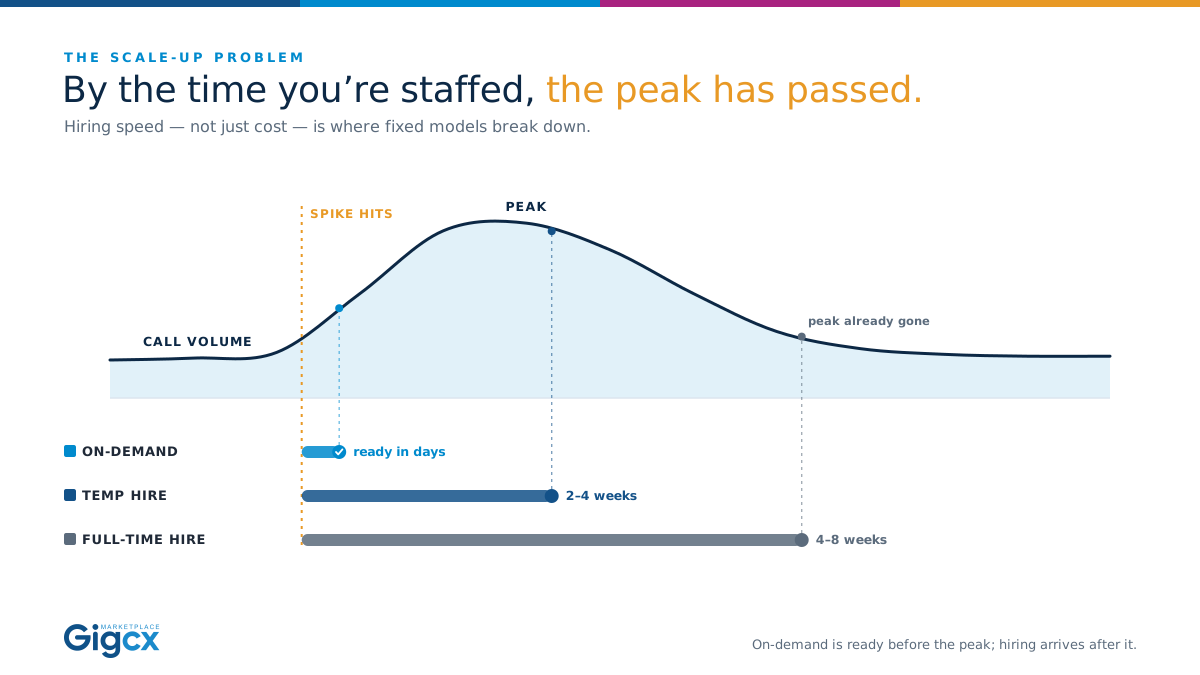
The first horn of the dilemma: when a spike hits, traditional staffing can't respond fast enough.
Filling a full-time role takes 4-8 weeks from requisition to productivity — not counting the lag time before a req gets approved. A temp-staffing solution can move faster, but it still requires sourcing, screening, activation, and certification before anyone takes a live call. Typical ramp time: 2-4 weeks.
What usually happens: by the time new capacity is certified and ready, the peak has either already passed or the organization has been burning out existing personnel with required additional service intervals for three weeks to compensate. Neither outcome is good, and both are expensive.
The Scale-Down Problem
The second horn: when the peak ends, fixed headcount doesn't go anywhere.
If you added additional personnel for a seasonal surge — even temporary personnel — you're now managing the transition process, dealing with attrition risk as people find other work during the slow period, and absorbing the idle cost of anyone who stays. The organizational muscle required to scale down a staffing model is almost as significant as the muscle required to scale up — and most organizations don't have a clean process for either.
This is part of why attrition in high-variability contact center environments tends to be so punishing: the model asks people to absorb overwork during peaks and idle time during valleys, and the group responds by leaving. A company supporting customer engagement for car dealerships reduced its attrition rate from over 100% to below 20% specifically by shifting from a fixed to an on-demand staffing model — not through better management of the same structure, but by removing the structure that was creating the problem.
Why the Math Never Balances
Here's the arithmetic problem at the core of fixed staffing for variable demand:
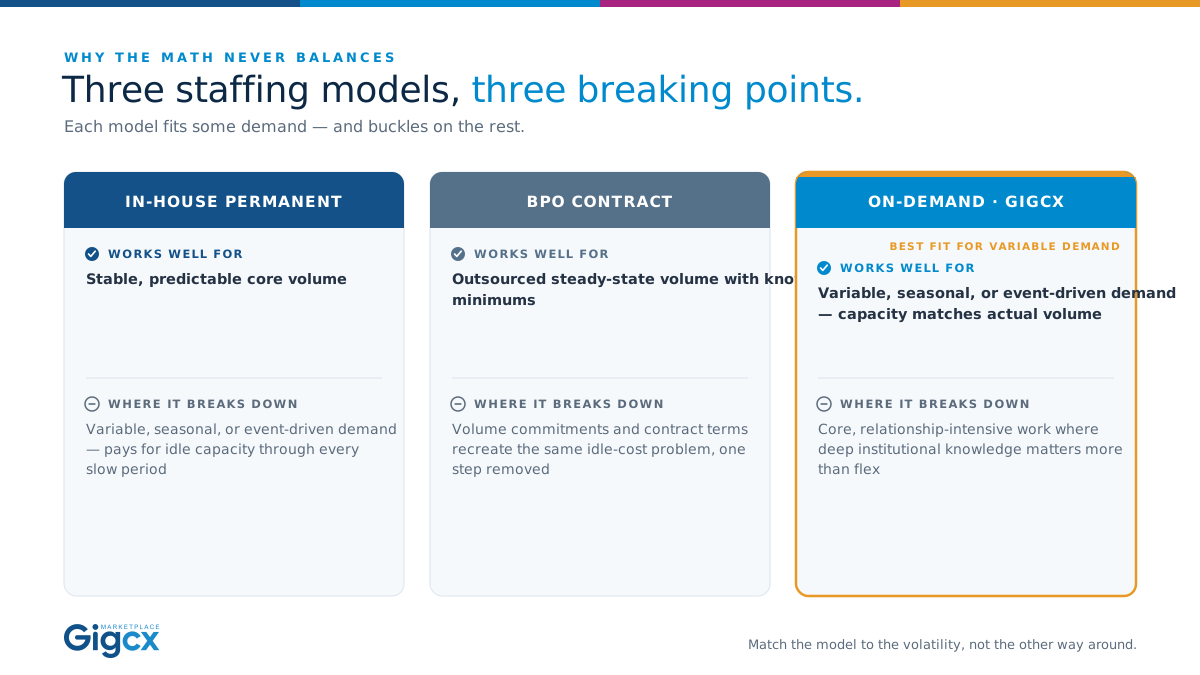
The math doesn't balance because fixed labor models were designed for predictable demand, and most CX demand isn't. An on-demand capacity model sidesteps the arithmetic entirely: instead of sizing for peaks and paying for valleys, organizations pay for productive hours against whatever demand actually shows up.
How to Scale Up for Seasonal Demand Without Staffing for It Permanently
The operational shift is straightforward in principle, even if it requires a change to how capacity planning works:
- Map your actual demand curve, not your business hours. Pull historical volume data at the hour-of-day, day-of-week, and week-of-year level. Where are your real peaks? How predictable are they? This data already exists — it just rarely directly drives staffing decisions.
- Define a core group sized for your baseline. The in-house or contracted group handles the stable, predictable volume that justifies permanent headcount. This is smaller than most organizations size it, because they're building in peak coverage that could be handled differently.
- Build a flexible layer for everything above baseline. GigCX Marketplace activates in days, not weeks — because Service Providers are already vetted, brand-certified, and ready before the surge arrives. When demand drops, that capacity scales back without layoffs, idle cost, or attrition pressure. For contact centers evaluating on-demand CX staffing vendors, this is the single most important operational difference to understand: speed of capacity, not just cost of capacity.
- Test the model on a known spike before you need it for an unknown one. Run a pilot program during a predictable peak — a seasonal push, a product launch, an annual event — and measure ramp time, quality, and cost against what you would have spent on the traditional approach.
The Bottom Line
Seasonal staffing math never works because it tries to solve a variable-demand problem with a fixed-cost answer. The organizational familiarity of permanent headcount makes it feel safe, but the economics penalize you whether volume is up or down. Building in an on-demand capacity layer doesn't eliminate the need for a core group — it eliminates the need to size that core group for your worst day.
For CX leaders evaluating on-demand contact center staffing vendors as an alternative to traditional permanent staffing or BPO contracts: the right question to ask any platform is not just "how many Service Providers do you have" but "how fast can they be ready to represent my brand." The answer to that question is where the real operational difference lives.
Want to understand how the on-demand CX model handles the full Service Provider lifecycle — sourcing through payment — in a single platform? Read our GigCX Marketplace field guide.
