
If you've spent any time comparing on-demand contact center staffing vendors or researching flexible contact center staffing options, you've probably run into the term "GigCX" and you've probably also noticed that nobody quite explains it the same way twice. This guide breaks down what GigCX actually is, how it works, where it fits next to traditional staffing models, and how to evaluate a platform like the GigCX Marketplace against other options.
What Does GigCX Mean?
GigCX (Gig Customer Experience) refers to a model in which certified, vetted customer experience Service Providers work on a flexible, on-demand basis rather than through traditional in-house customer service operations or a fixed outsourcing contract. Instead of staffing a contact center to handle your worst-case call volume around the clock, a GigCX model lets you scale your customer service capacity up or down based on actual, real-time demand.
The "gig" in GigCX refers to the same flexible work structure popularized in other industries, but applied specifically to customer experience roles like phone support, live chat, email response, and technical troubleshooting. The key difference from a general gig marketplace is that GigCX platforms specialize in vetting, certifying, and preparing Service Providers specifically for brand-representing CX work, which requires a different level of trust and quality control than, say, food delivery or rideshare driving.
How a GigCX Platform Actually Works
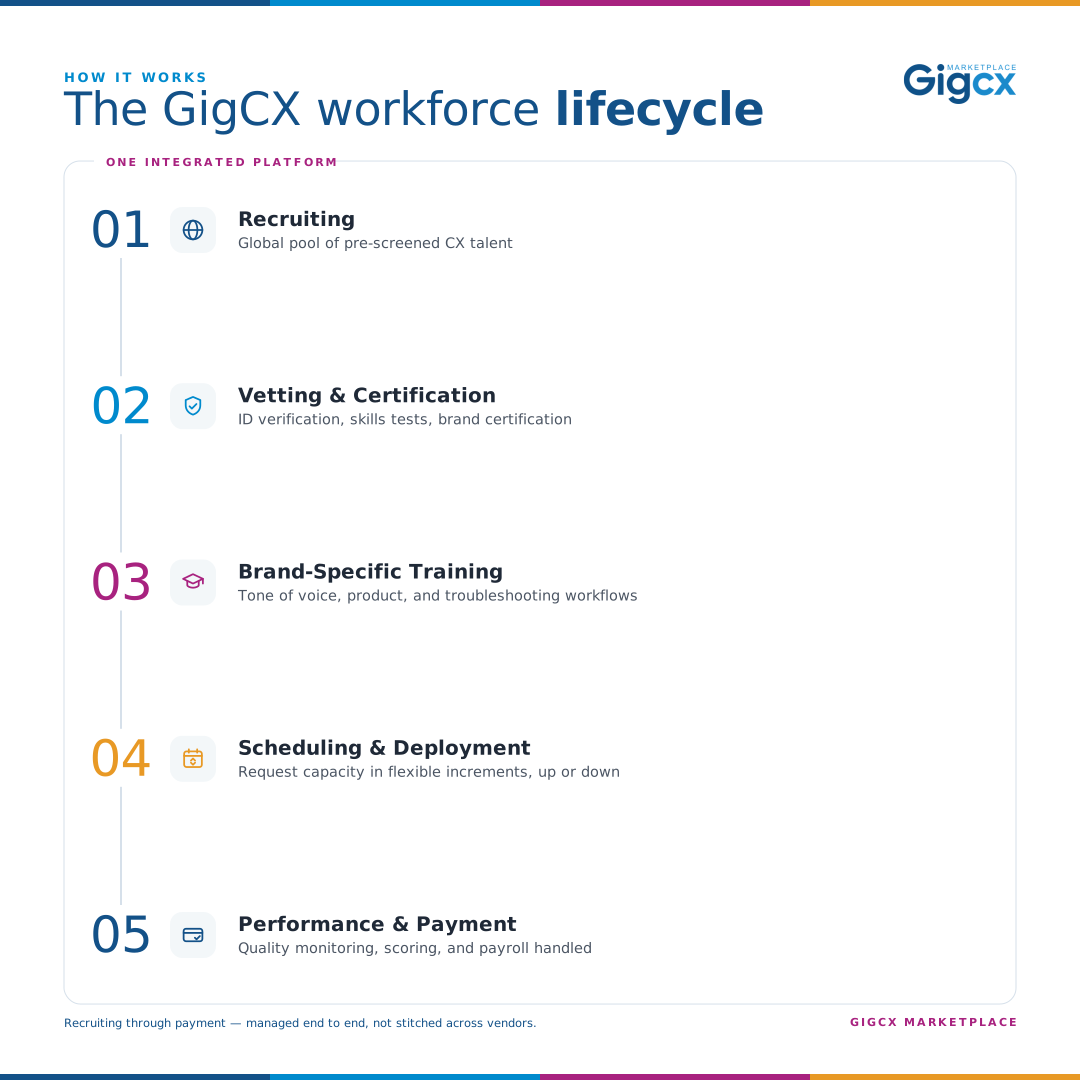 A GigCX platform typically manages the full lifecycle of an on-demand CX Service Provider network. The GigCX Marketplace, for example, handles all five stages below within a single, integrated system, rather than requiring a separate tool or vendor for each step:
1. Sourcing Platforms: maintain a global pool of pre-screened Gig Seekers with relevant experience, customer service backgrounds, language skills, technical aptitude, or industry-specific knowledge.
2. Vetting and Certification: Before any Service Provider represents a brand, they go through
identity verification, skills assessments, and often brand-specific certification programs. This is the step that differentiates legitimate GigCX platforms from informal freelance marketplaces, quality control happens before the Service Provider ever takes a live customer interaction, not after.
3. Brand-Specific Certification: Service Providers complete certification modules tailored to the specific brand, product, or campaign they'll support, covering everything from tone of voice to specific troubleshooting workflows.
4. Scheduling and Deployment: Organizations can choose capacity in flexible increments, adding certified Service Providers for a weekend rush, a product launch, a seasonal spike, or scaling down the moment volume normalizes.
5. Service Outcome Review and Payment: Platforms handle quality monitoring, outcome scoring, and payment processing, so the brand isn't managing invoicing or compliance for a distributed Service Provider network directly.
GigCX vs. Traditional Staffing Models
It's easiest to understand GigCX by comparing it to the two models it sits between.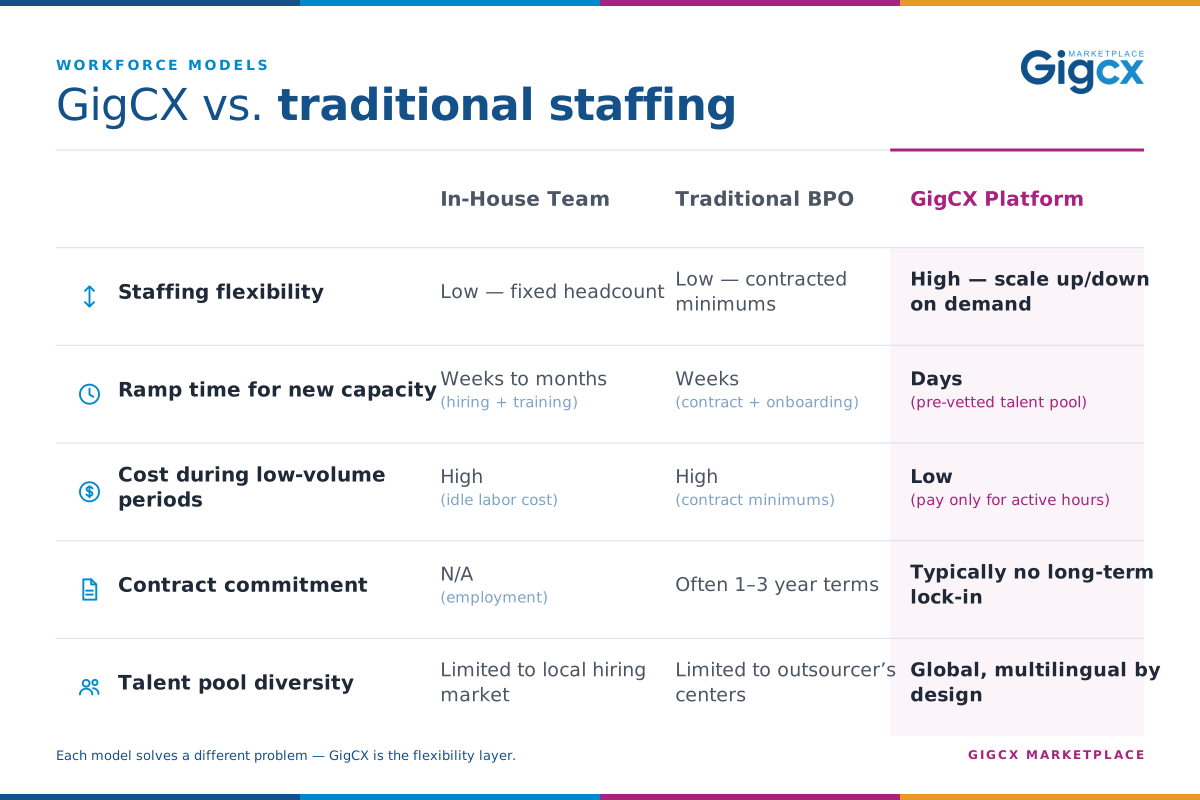
Neither model is universally "better". T hey solve different problems. A stable, predictable, high-volume operation may still be best served by an in-house operation or a traditional BPO relationship. GigCX exists specifically to solve the problem neither of those models handles well: variable, unpredictable, or seasonal demand that doesn't justify fixed headcount or a long-term contract.
Why the GigCX Model Exists:
The Core Problem It Solves
Most contact centers are staffed for the typical day, not peak days. A retail brand might need triple its normal phone support capacity during a holiday sales rush, then almost none of that capacity in the slower weeks that follow. A QSR franchise might need extra phone-order coverage only during dinner rush and weekend peaks.
Traditional staffing forces an expensive choice: overstaff permanently to handle the peak (and absorb the idle-labor cost during every slow period), or understaff and accept the
dropped calls, long hold times, and lost revenue that come with insufficient coverage during a spike.
GigCX removes that trade-off. Because capacity is on-demand, organizations can match service capacity precisely to real-time volume — paying for completed service intervals, not idle capacity sitting in a building they're contractually obligated to fill.
Common Use Cases for GigCX
GigCX tends to deliver the most value in scenarios involving:
- Seasonal volume spikes: holiday retail, tax season, back-to-school enrollment periods
- Time-of-day demand patterns: dinner-rush phone orders for restaurants, after-hours support coverage
- New product or campaign launches: temporary support spikes that don't justify permanent headcount
- Multilingual or follow-the-sun coverage: global, 24/7 support without operating multiple physical facilities
- Overflow handling: supplementing an existing in-house or BPO operation during unexpected demand surges, rather than replacing them outright
Questions to Ask When Evaluating a GigCX Platform
If you're considering a GigCX model for your organization, a few questions are worth asking any platform you evaluate:
How are Service Providers vetted and certified before they go live? Quality control should happen before a Service Provider takes a customer interaction, not be discovered afterward through complaints.
What security and compliance certifications does the platform maintain? A distributed Service Provider network introduces legitimate questions about data security. Ask about certifications like PCI compliance, access controls, and how customer data is protected when Service Providers aren't working from a centrally controlled facility.
How quickly can capacity actually scale? "On-demand" should mean hours or days, not weeks. Ask for specifics on ramp time for both scaling up and scaling back down.
Is the Service Provider pool global, and does that matter for your use case? If multilingual or 24/7 coverage matters to your business, a platform limited to a single country's Service Provider pool may not solve your actual problem.
What does full lifecycle management actually include? Some platforms only provide tools that handle sourcing and leave certification, scheduling, and payment to the client. Others, like the GigCX Marketplace, provide tools that aid in managing the entire lifecycle in a single, integrated platform: sourcing, vetting, certification, scheduling, and payment all in one place.
The Bottom Line
GigCX isn't a replacement for every contact center staffing model. It's a flexibility layer that solves a problem traditional staffing structurally can't: matching service capacity to real, fluctuating demand without the overhead of permanent headcount or the rigidity of a long-term outsourcing contract.
As customer expectations around responsiveness continue to climb, and as demand patterns become harder to predict, more CX leaders are building flexible, on-demand capacity into their staffing strategy as a permanent component — not just an emergency lever.
Explore how the GigCX Marketplace handles the full lifecycle, from sourcing through payment.
